How are blister packs manufactured?
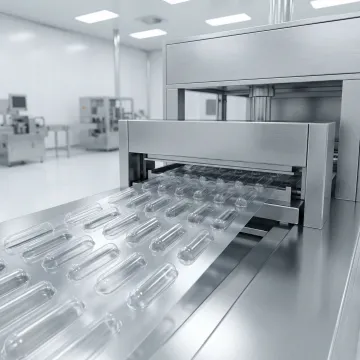
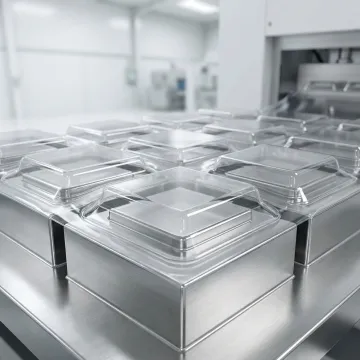
Blister packs are manufactured through a thermoforming process called vacuum forming. Plastic sheets (typically PET, PVC, or HDPE) are heated to a pliable temperature, then drawn over a custom aluminum mold using vacuum pressure. This creates precise cavities shaped to your product. After cooling, the formed plastic is trimmed and sealed to cardboard backing using heat or ultrasonic bonding, creating a tamper-evident package. The entire process is controlled for dimensional accuracy and regulatory compliance.
What materials are best for pharmaceutical blister packaging?
Pharmaceutical blister packs typically use PVC (polyvinyl chloride) or PET (polyethylene terephthalate) for the forming web, paired with aluminum foil backing for superior moisture and oxygen barrier protection. PVC offers excellent formability and cost-effectiveness, while PET provides enhanced clarity and environmental advantages. Material selection depends on your product's sensitivity to moisture, light, and oxygen, as well as regulatory requirements. We conduct compatibility testing to ensure the chosen material maintains product stability throughout its shelf life.
Can you create custom blister pack designs for unique product shapes?
Absolutely. Our engineering team specializes in custom tooling for products of any shape or size. We begin with 3D CAD modeling to optimize cavity geometry, ensuring secure product fit, efficient material usage, and aesthetic appeal. Our aluminum molds can accommodate complex geometries, undercuts, and multi-cavity configurations. We produce prototype samples for fit testing and approval before committing to full production tooling, guaranteeing your custom blister design performs flawlessly.
What is the typical lead time for blister pack manufacturing?
Lead times vary based on project complexity and tooling requirements. For new custom projects requiring mold fabrication, expect 4-6 weeks from design approval to first production samples. This includes tool engineering, prototype development, and testing. Once tooling is approved, production runs typically ship within 2-3 weeks depending on order volume. For repeat orders using existing tooling, turnaround is significantly faster—often 7-10 business days. We provide detailed project timelines during the consultation phase.
Do your blister packs meet FDA and regulatory compliance standards?
Yes. Our pharmaceutical-grade blister packaging is manufactured in compliance with FDA regulations for food and drug contact materials. We maintain rigorous documentation for material traceability, conduct validation testing for seal integrity and barrier properties, and follow Good Manufacturing Practices (GMP). For medical device packaging, we can accommodate ISO 11607 requirements. Our quality control team ensures every batch meets applicable regulatory standards before shipment, providing certificates of compliance upon request.
What is the minimum order quantity for custom blister packs?
Minimum order quantities depend on the complexity of your design and tooling investment. For standard configurations, we can accommodate runs as small as 5,000-10,000 units. More intricate custom tooling may require higher minimums (25,000-50,000 units) to justify mold fabrication costs. However, we work with startups and established brands alike to find cost-effective solutions. During consultation, we'll provide transparent pricing and recommend the most economical production strategy for your budget and timeline.
Can you add child-resistant or tamper-evident features to blister packs?
Yes. We offer multiple security options to meet safety and regulatory requirements. Child-resistant blisters utilize push-through or peel-back mechanisms that require coordinated motor skills, complying with CPSC and PPPA standards. Tamper-evident features include heat-sealed card backing that shows visible damage if breached, perforated tear strips, and holographic labels. We conduct testing to verify compliance with applicable safety standards and can provide validation documentation for pharmaceutical submissions.
Do you offer prototyping before committing to full production?
Absolutely. Prototyping is a standard part of our development process. We create sample blisters using production-intent materials and tooling to validate fit, function, and aesthetics before full-scale manufacturing begins. This allows you to conduct internal testing, gather feedback, and make design refinements without the risk of costly production errors. Prototype development typically takes 2-3 weeks and includes multiple samples for drop testing, assembly verification, and stakeholder approval.